One Meal
At A Time.
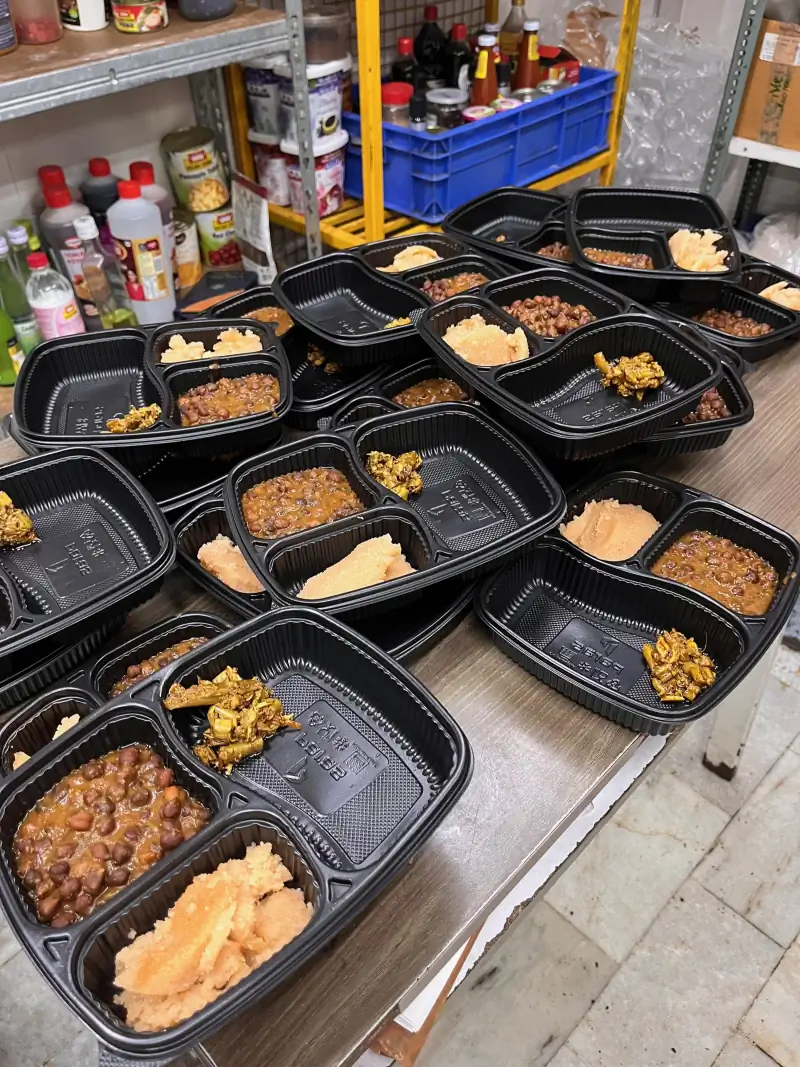
Every week, at every kitchen we run, we cook langar and take it out to whoever needs it. Not leftovers. Not a separate, cheaper batch. The same food we sell, out of the same pots, on the same day. Around 300 meals a month, every month since our first kitchen opened.
Everyone Eats
The Same Food.
In a Sikh kitchen, langar is not charity. It is the deliberate removal of rank. One pot, one floor, one meal — the person who cooked it and the person who needed it sit in the same line and eat the same thing. Nobody is served a lesser version because of who they are or what they can pay.
Our mothers taught us the other half of it, and they taught it without ever calling it a value. You cook a little extra. You make sure it reaches someone. No announcement, no photograph, no ledger. Just a slightly bigger pot than the house needed, every single time.
We build food businesses now. We have kitchens, chefs, cold chain, packing lines, delivery riders — an entire machine for getting hot food to people quickly and consistently. It would be strange to own all of that and not point it at the thing our mothers were doing with one extra handful of dal.
We are not trying to solve hunger. We are trying to make sure that on the day we cook, somebody who wasn't going to eat, eats.
The whole plan, honestly
That is the entire vision, and we would rather state it small and keep it than state it big and miss. Distribute this one meal at a time. Every kitchen we open, opens a langar with it. As the map grows, this page grows.
Rooted in India.
Built for the World.
Glisco is a multi-brand kitchen. Indian, global, breakfast, bakery, Asian — all of it comes out of the same building. So the identity cannot belong to any one cuisine, and it should never read as “Indian restaurant”.
What it needs to carry instead is food, movement, systems, origin and variety. The wave does all five at once.
Look at it quickly and it is flowing hills, or water. Look at it properly and it is the Indian landscape — the Himalayas falling into hills, hills into rivers, rivers into plains, plains into coastline. India is geographically extraordinary, and Indian textile traditions have always taken their visual language from the land around them. We are doing the same thing, for the same reason.
The waves are the landscape
Not decoration. A map of where the food comes from — mountain to coast, in one continuous line.
Many brands, one system
Every line runs in parallel and none of them collide. That is the kitchen, drawn.
Made to travel
It works in one colour, at any size, on butter paper, a cutlery pouch, a box or a screen — which is exactly where our food ends up.
No Separate Standard.
The fastest way to make giving feel like pity is to hand over something you would not serve a paying customer. So we don't. Here is the whole discipline.
Cooked on the same line
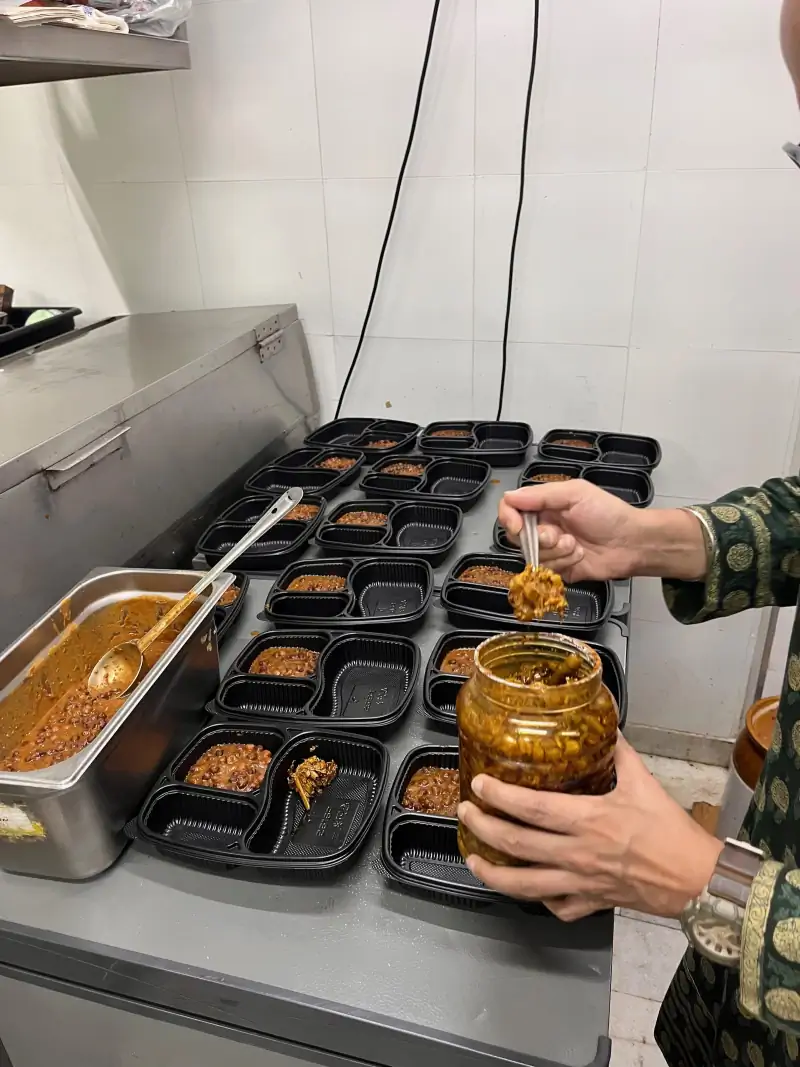
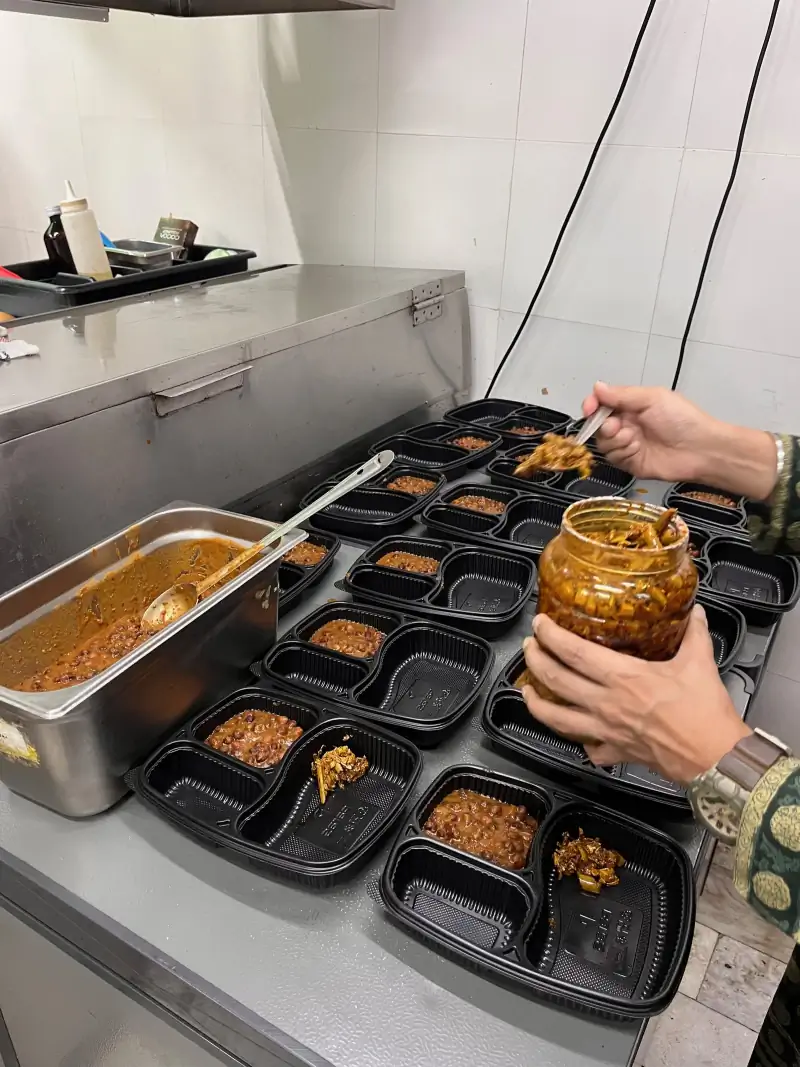
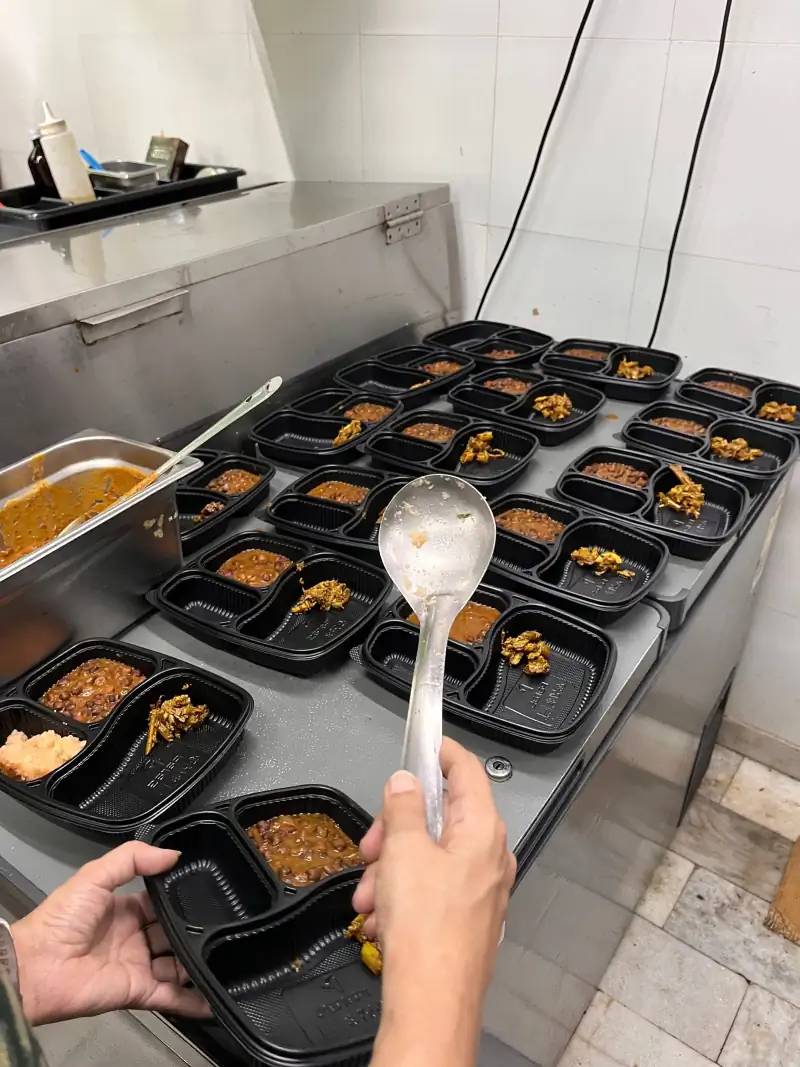
Langar comes off the same burners, the same prep tables and the same SOPs as every order we sell that day. There is no second kitchen and no second grade.
A full meal, not a token
A sabzi or dal, rice or roti, and achaar. Portioned properly, the way you would want to receive it — enough to actually be a meal.
Sealed and packed
Every meal goes into a sealed tray. It stays hot, it stays clean, it travels, and it can be carried away and eaten later without anyone having to eat in front of an audience.
Handed over in person
Our own team takes it out near the kitchen and hands it over directly. No drop-off point, no intermediary, nobody asked to prove they need it.
Three Kitchens.
Three Langars.
We run langar out of every kitchen we operate — currently three across Delhi NCR, once a week at each. A kitchen has never opened here without a langar opening with it, and none of them has stopped since.
Greater Kailash 1
South Delhi. Our first kitchen, and the first langar — it started the month the kitchen did.
DLF Phase 4
Gurugram. Opened, and started cooking langar the same month.
Vasant Kunj
South West Delhi. Our newest kitchen, on the rota from day one.
This list is the current one, not the final one. Every new Glisco kitchen brings a langar with it — when a kitchen opens, this page changes.
What It Actually
Looks Like.
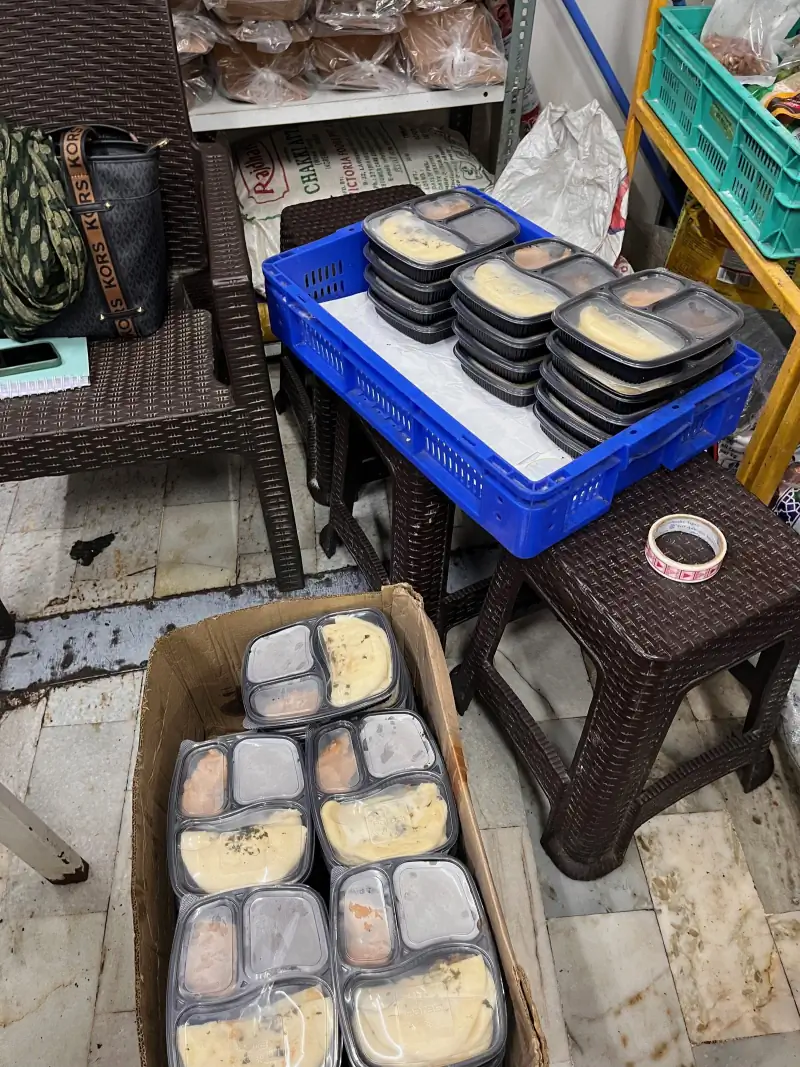
Photographs from our kitchens, unstyled. This is a working line, not a photoshoot. More arriving as the team sends them in.
You Don't Need
A Kitchen.
People want to do langar far more often than they actually do it — because it is one thing to want to feed two hundred people and quite another to know where to cook, how much dal that is, what it costs, how to pack it, and where to take it.
We already know all of that. So if you want to run a langar — for a birthday, an anniversary, a barsi, a thank-you, or for no reason at all — call us.
We will cook it in our kitchens to the same standard as everything else, pack it, and go out and distribute it with you. Or, if you would rather run your own, we will help you set it up, tell you honestly what it costs, and then get out of your way.
+91 93192 11228Call or WhatsApp — ask for langar